Some companies begin with a market opportunity. Levelheaded began with a family legacy, a new scientific question, and a belief that people deserve an easier way to ask for help.
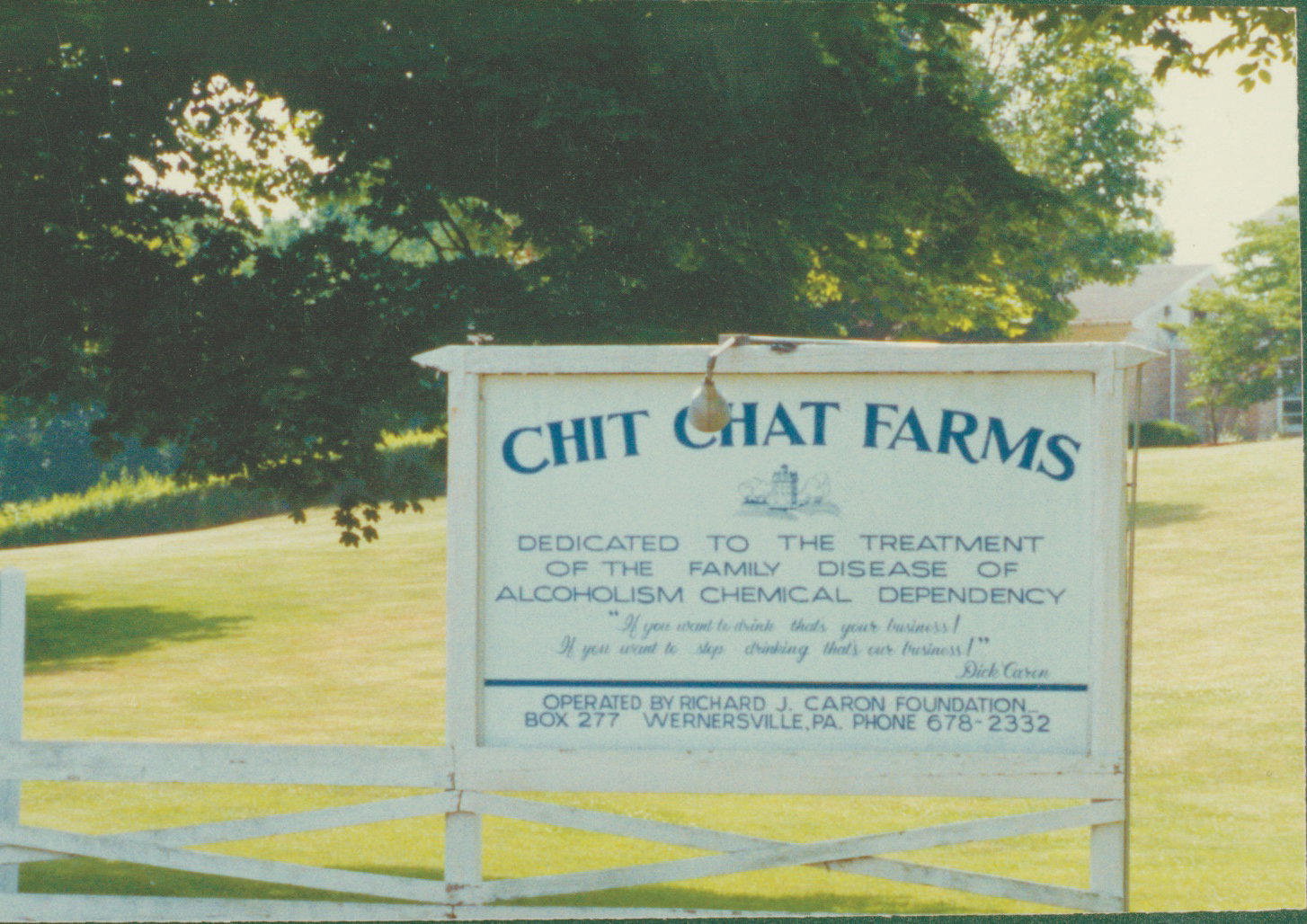
In 1950, Richard “Dick” Caron took his last drink. Alongside his wife, Catherine, he began helping others find their way into recovery. Their work grew into the organization established in 1957 that would become Caron Treatment Centers. Dick understood the struggle firsthand. Catherine understood what it meant for the entire family. Together, they helped create a place where people could find support, dignity, and a way forward.

Their granddaughter, Valerie Caron, grew up with that legacy.
For Valerie, behavioral health was never an abstract category. It was part of her family’s history: the people who needed care, the families affected alongside them, and the possibility of rebuilding a life.
Decades later, she would return to the same question through a different lens: how could more people reach that possibility earlier?
“I saw a gap no one had built for: people who don’t identify as having a problem, but know certain patterns are becoming unmanageable or holding them back. I knew how to make that first step more accessible. I built Levelheaded so people could act on that awareness—and pursue a better life before reaching a breaking point.”
A new scientific question.
In 2019, a new chapter of the science began. With NIH/NIDA funding, researchers at Penn State College of Medicine launched a program testing whether GLP-1 medications, the same class behind today’s weight-loss boom, could quiet opioid cravings.
From 2021 to 2023, Caron’s Pennsylvania campus served as the clinical site for the first randomized human trial of that idea, with Dr. Adam Scioli as a study physician. Early results, reported in a 2025 preprint, pointed to roughly 40% lower cravings with the medication than with placebo in a small group of participants, an early signal that led to a larger 200-person trial now underway.
In 2024, as Caron’s Chief Medical Officer, Dr. Scioli led the launch of Caron’s GLP-1 program, bringing GLP-1s into care alongside therapy. By spring 2026, the program had prescribed GLP-1s to more than 450 people. But that access still lived behind a residential campus.
Valerie saw a clear opportunity: bring the emerging science of GLP-1s and cravings beyond the clinic walls.
The public knew GLP-1s for weight loss. Far fewer understood that researchers were investigating their potential to reduce cravings alongside existing treatment. She knew how to make that science understandable and build a more accessible path to medical evaluation.
Learning how to reach people.
Valerie had spent the previous decade building a company around another deeply personal experience.
As CEO and co-founder of BLANQI, she helped build a direct-to-consumer pregnancy and postpartum support brand that generated more than $80 million in lifetime sales. It was a category many women felt they had to quietly put up with: most didn’t realize they needed support for their changing bodies until the aches and pains of pregnancy made it impossible to ignore. The work meant reaching them earlier, by understanding what they needed, how they described those needs, and what made them feel seen before discomfort became the reason to ask for help.
It also taught her that access involves more than making a product available.
People need language they recognize. They need an experience they can navigate. They need to understand what comes next—and feel comfortable taking that first step.
Those lessons became central to the thinking behind Levelheaded.
Healthcare carries different responsibilities, but the importance of the experience remains. The words on a page, the questions in an assessment, and the path to a provider can all influence whether someone continues or closes the tab.
Valerie saw an opportunity to bring her consumer experience to a field that had shaped her family for generations.
Bringing the two together.
Levelheaded brings together those two parts of Valerie’s experience: a family legacy rooted in recovery and a career spent building direct relationships with consumers.
She co-founded the company with Aidan Carter and launched Levelheaded in beta on April 15, 2026, with a broader launch planned in October.
Someone may recognize a behavior long before they know how to describe it clinically. They may know they are repeating a pattern, struggling with cravings, or spending too much energy negotiating with themselves. They may be ready to make a change without knowing where to begin.
Levelheaded is being built around that moment.
Behavioral health as performance health.
Levelheaded saw an opportunity to change how people enter the behavioral health conversation.
Many people want more control over their choices, more consistency in their habits, and more capacity for the things that matter to them. They can see where a pattern is costing them—in their relationships, focus, energy, or ability to follow through—even if they would never describe themselves as having a “problem.”
Levelheaded is being built for that moment of recognition.
Its vision brings behavioral health into the broader pursuit of performance health: understanding the biology and patterns that influence how we function, then finding appropriate support to improve them.
We already invest in strength, nutrition, and sleep to perform better. The behaviors that shape our days deserve the same attention. How we respond to stress. What we reach for to feel better. The loops we repeat despite wanting a different outcome.
For Valerie, making care more accessible begins with making that conversation more relevant. People should be able to seek support because they want their lives to work better. They should have a clear place to begin when a habit becomes harder to manage, when intentions stop translating into action, or when the effort required to stay in control starts taking too much from everything else.
Levelheaded connects that ambition. Emerging GLP-1 research informs part of the conversation, while providers evaluate whether treatment is appropriate for each person.

Opening the next door.
The connection between the Caron family’s history and Levelheaded is personal.
Dick and Catherine devoted their lives to helping people find a way into recovery. Their granddaughter is building a company combining both inheritances, the science her family’s name helped put on the map, and the consumer playbook to make it reachable from anywhere.
Today, that entry point can begin on a phone, in someone’s home, at the moment they decide they want something to change.
Levelheaded’s vision is to meet them there—with language they understand, education they can use, and a path toward an informed conversation about their health.
Learn your biology. Break your loops. Live Levelheaded.