
The science isn't new. The way we're using it is.
We are reframing the way we think about dopamine health and high-performance living.
GLP-1 receptor agonists were built for metabolic health. What the research is now showing is that the same pathway they act on — the brain's reward circuitry — is the pathway behind the loop. Not a side effect. Not a coincidence. The same biology, doing what it was always going to do once someone pointed a GLP-1 at it. That's the science this page is about.
How it works.
Step 1
The pathway
Cravings run through the brain's mesolimbic reward system — the same circuitry that lights up in response to food, substances, and compulsive behaviors.
Step 2
The mechanism
GLP-1 receptor agonists act upstream on that system, not on a single trigger. They don't block a craving in the moment — they turn down the volume on the whole loop.
Step 3
What it feels like
Less noise. More space between the urge and the action. Room to actually use the tools you're building in parallel.
What the research actually shows.
We sort every study we cite into four tiers, from established to emerging — so you always know how solid the ground is under a claim.
TIER 1
Established
Klausen MK, Justesen SK, Pedersen JN, et al. “Once-weekly semaglutide versus placebo in patients with alcohol use disorder and comorbid obesity: a randomised, double-blind, placebo-controlled trial.” The Lancet. 2026;407:1687–1698.
The field’s first positive randomized trial in a treatment-seeking population — 108 adults with alcohol use disorder and obesity, semaglutide cut heavy drinking days by 41 percentage points vs. 26 for placebo over 26 weeks, on top of standard therapy.
Cai M, Choi T, Xie Y, Al-Aly Z. “Glucagon-like peptide-1 receptor agonists and risk of substance use disorders among US veterans with type 2 diabetes: cohort study.” BMJ. 2026;392:e086886.
A 600,000+ person VA cohort found GLP-1 use tied to a 14–25% lower risk of developing a substance use disorder, and to roughly 25–50% fewer overdoses, hospitalizations, and deaths in those who already had one.
TIER 2
Strong support
Schacht JP, Sakai JT, Raymond K, Shelton R. “Oral Semaglutide for Alcohol Use Disorder: A Randomized Clinical Trial.” American Journal of Psychiatry. 2026 Jul 29.
An 8-week trial (n=50) missed its lab-based craving endpoint but found real reductions in heavy drinking days, drinks per drinking day, and even cannabis use — an honest, useful data point on where oral dosing helps and where it doesn’t.
Buciuc AG, Gold MS, Fuehrlein B. “Glucagon-like Peptide-1 Receptor Agonists for Substance Use Disorders: Comprehensive Review of Circuit Mechanisms and Clinical Evidence.” Addiction & Prevention. 2026;1(1):7.
The most current synthesis available (published Sept. 4, 2026) — walks through the circuit-level mechanisms substance by substance and is candid that alcohol has the strongest evidence while opioid, cocaine, and cannabis data are still early.
Völker KM, Prechtl BLH, Bormann NL, Choi DS. “The potential role of GLP-1 receptor agonists in substance use disorders – a systematic review.” Frontiers in Pharmacology. 2026.
TIER 3
Early / promising
Dai H, Radwan RM, Scheiffele GD, et al. “GLP-1 Receptor Agonists and Substance Use Disorders in Older Adults With Type 2 Diabetes: A Target Trial Emulation.” Obesity. 2026;34(S2):88–100.
A Medicare cohort of adults 65+ found GLP-1 use tied to fewer substance-use-related hospitalizations — extending the VA finding to an older population.
“Glucagon-like peptide 1 receptor agonists in substance use disorders: a systematic review of clinicaltrials.gov.” Journal of Substance Use & Addiction Treatment. 2026.
Of 192 registered trials screened, 33 evaluate GLP-1RAs for substance use outcomes — heaviest activity in alcohol and nicotine. A first trial for cannabis use disorder (HASHTAG) has since been registered.
Grigson PS (PI). “Use of a GLP-1R Agonist to Treat Opioid Use Disorder (Phase II).” NIH-funded trial, Caron Treatment Centers. Ongoing.
A larger follow-on trial building on Phase I findings (40% reduction in opioid cravings vs. placebo) — this is the trial Dr. Scioli ran the first phase of at Caron Treatment Centers.
Trial ID: NCT06548490
TIER 4
Preliminary / exploratory
Klausen MK, Jensen ME, Møller M, et al. “Exenatide once weekly for alcohol use disorder investigated in a randomized, placebo-controlled clinical trial.” JCI Insight. 2022.
The predecessor trial to the 2026 Lancet result above — missed its primary endpoint overall, but a subgroup with higher baseline BMI responded, a signal that ended up bearing out in the later, obesity-restricted SEMALCO trial.
Our Clinical Leadership:
Chief Medical Advisor
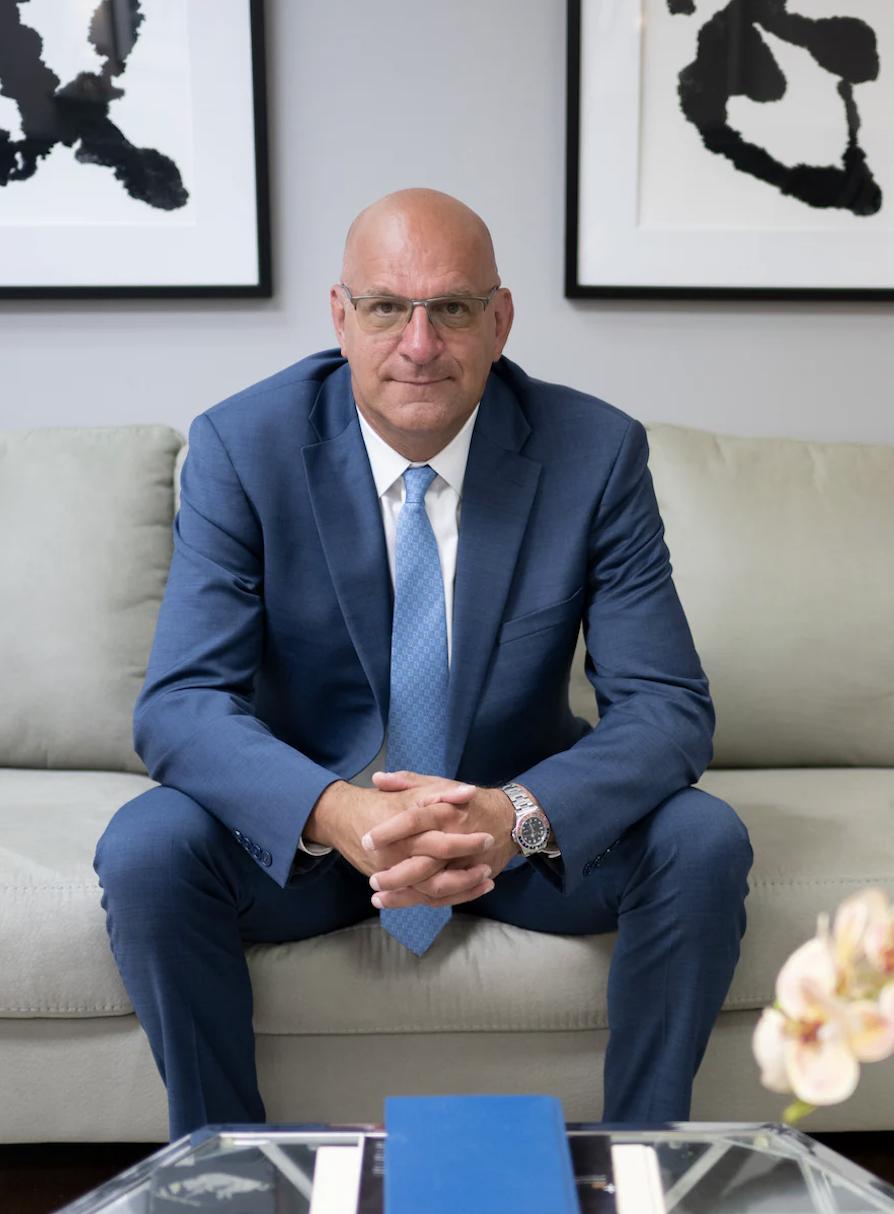
Dr. Adam D. Scioli, DO, DFAPA, FASAM, FAOAAM
Dual board-certified psychiatrist and addiction medicine physician. Incoming President, American Osteopathic Academy of Addiction Medicine (Oct. 2026). Former Chief Medical Officer, Caron Treatment Centers.
Dr. Scioli was part of the first team to run a controlled clinical trial testing a GLP-1 receptor agonist for craving reduction — a study conducted in partnership with Penn State University College of Medicine. That work is one of the foundations this protocol is built on.
Published research
Freet CS, Evans B, Brick TR, Deneke E, Wasserman EJ, Ballard SM, Stankoski DM, Kong L, Raja-Khan N, Nyland JE, Arnold AC, Krishnamurthy VB, Fernandez-Mendoza J, Cleveland HH, Scioli AD, Molchanow A, Messner AE, Ayaz H, Grigson PS, Bunce SC. "Ecological momentary assessment and cue-elicited drug craving as primary endpoints: study protocol for a randomized, double-blind, placebo-controlled clinical trial testing the efficacy of a GLP-1 receptor agonist in opioid use disorder." Addiction Science & Clinical Practice, 19(1):56 (2024).
Read the published study on Addiction Science & Clinical Practice →
ClINICAL advisory board


From research to your protocol.
This is the science behind what you'd actually be prescribed . See how it comes together.